About TRIO McNair Scholars
Fueling Discovery & Innovation
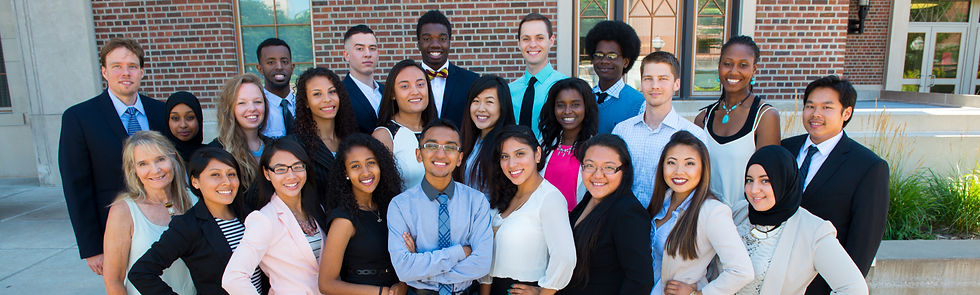
The TRIO McNair Scholars Program at the University of Minnesota Twin Cities is more than a scholarship—it is an incubator for the academic leaders of tomorrow. We identify high-potential, first-generation, and underrepresented undergraduates and equip them with the tools to redefine the boundaries of research and excellence.
How We Prepare Future Leaders:
-
Rigorous Research: Scholars engage in hands-on summer research with dedicated faculty mentors.
-
Academic Support: Students receive 1:1 advising, graduate school preparation seminars, and doctoral roadmap planning.
-
Financial Investment: Scholars receive stipends that are competitive with other research and graduate scho
-
Community: Students join a thriving national network of peers committed to social impact.
Our Impact
Our scholars are making bold contributions in fields from biotechnology to public policy. Aligned with the University's goals, we are building a pipeline of diverse researchers who are shaping a safer, more equitable, and more innovative future.
About Ronald E. McNair
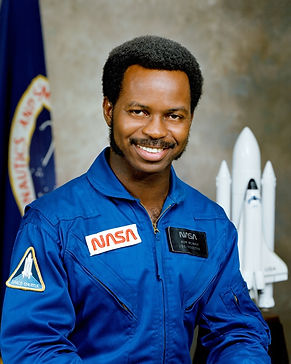
The McNair Scholars Program is named in honor of Dr. Ronald Erwin McNair (1950–1986)—a physicist, astronaut, and trailblazer.
Raised in a working-class family in Lake City, South Carolina, McNair overcame systemic barriers to become a nationally recognized scientist. He earned his Ph.D. in physics from the Massachusetts Institute of Technology (MIT) and went on to become one of NASA’s first African American astronauts. In 1984, he flew aboard the Space Shuttle Challenger. Two years later, he tragically lost his life in the Challenger accident.
Dr. McNair’s legacy lives on through the program that bears his name. His life exemplifies the determination, brilliance, and resilience that McNair Scholars embody today. The program honors his belief that talent exists everywhere—and that with opportunity, mentorship, and persistence, students from all backgrounds can achieve excellence.
What Our McNair Scholars Say...

"The McNair Program helped me, a first-gen scholar, gain more insight on the graduate school application process as well as with drafting my application materials. It also helped me prepare to conduct research at a graduate school level that prepared me for the current research that I do."
Lizette Horne, UMN PhD Student & 2021 McNair Scholar
The McNair Advantage:
A Comprehensive Ecosystem
Research experiences are valuable, but they are often isolated. McNair is different. We provide a holistic, 360-degree support system designed to remove barriers between a scholar and graduate school.
UNMATCHED MENTORSHIP
We don't just advise; we partner. Students get dedicated faculty mentors and 1:1 coaching from our McNair Advisors.
STRATEGIC FUNDING
We fund our scholars' time so they can focus on discovery. Scholars receive competitive stipends and waivers for grad school application fees.
NATIONAL LAUNCHPAD
Students join a powerful, nationwide network of McNair alumni and peers that support them for life.
Our History
Since its founding, the TRIO McNair Scholars Program at the University of Minnesota Twin Cities has remained dedicated to empowering students through research, mentorship, and graduate school preparation. Below is a glimpse into some of the key milestones that have shaped our program and its ongoing impact.
2026
2020
2012
1991
A Thriving Community: After 35 years, McNair still provides support for first-generation and income-eligible students each year from a wide range of academic disciplines. Our scholars are pushing the boundaries of undergraduate research, producing impactful work that addresses some of today’s most pressing issues. As we look ahead, our program remains deeply rooted in its mission to uplift and empower the next generation of scholars and change-makers.
Unwavering Resilience: While the world paused for COVID-19, McNair pivoted. We instantly transitioned to virtual mentoring, ensuring scholars continued to receive the support, guidance, and resources they needed during an especially challenging time.
A New Era of Leadership: Anthony Albecker becomes only the second director in our history. Albecker had been involved with the program as a dedicated volunteer since 2004, bringing a deep understanding of its mission and community.
The Foundation: The TRIO McNair Scholars Program at the University of Minnesota Twin Cities was established in 1991, thanks to a successful grant written by Sharon Shelskye.